

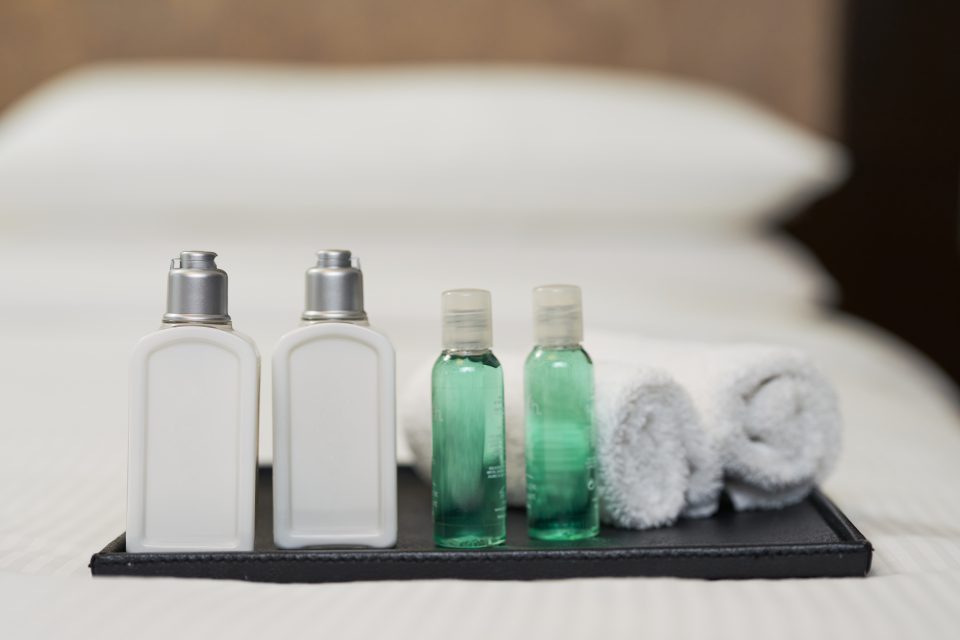
When guests check out of a hotel, they often leave behind shampoo, conditioner, body wash, and soap they have barely used. These small leftovers can create a surprisingly large waste problem when multiplied across hundreds of rooms and frequent guest turnover. For hotels looking to improve sustainability in hotels, understanding what happens to these amenities is a useful starting point for reducing waste without compromising guest comfort.
What Happens to Opened Hotel Toiletries After Checkout?
The fate of partially used toiletries depends on the hotel’s housekeeping procedures, amenity policies, and available waste-reduction options. There is no single practice followed by every property.
Unopened toiletries may be kept for future guests. If a bottle or package is sealed and appears untouched, some hotels leave it in the room or return it to inventory for another stay. This can help reduce unnecessary disposal, provided the item meets the hotel’s cleanliness and presentation standards.
Opened mini bottles are often discarded. Even when a shampoo or body wash bottle is mostly full, staff may remove it after checkout because the hotel cannot reliably confirm how it was handled. Reusing opened products can raise concerns about contamination, guest expectations, and consistency. As a result, usable product and its packaging may end up in the waste stream.
Some hotels have reuse or recycling programmes. Depending on local facilities and partnerships, hotels may be able to divert certain amenity packaging from landfill or donate eligible products. However, not every product can be reused, and recycling options depend on the packaging material and local collection rules.
These differences matter because a bottle that looks nearly full to a guest may still be treated as waste by the housekeeping team. Reducing the number of disposable items provided in the first place can help hotels address the problem at its source.

Why Single-Use Hotel Amenities Create So Much Waste
Individual toiletries are convenient. They give each guest a fresh, packaged product and make it easy for housekeeping staff to prepare a room. The challenge is that many guests use only a small portion of each item during a short stay.
A guest staying one night might use a little shampoo and leave the rest behind. If the hotel replaces opened bottles after every checkout, the remaining product and container may be discarded even when most of the contents are still usable.
Across a busy property, this pattern can repeat hundreds or thousands of times. The waste includes more than leftover shampoo or soap. It can also include plastic bottles, caps, labels, packaging materials, and the resources needed to manufacture and transport replacement products.
There are operational costs, too. Staff need to remove used amenities, dispose of them, unpack replacements, and restock rooms. Individual products also require regular purchasing and inventory management.
Improving sustainability in hotels means looking at the entire amenity process rather than focusing only on whether a small bottle can be recycled. Preventing avoidable waste can reduce both the volume of discarded packaging and the work involved in replacing it.
How Hotels Can Reduce Toiletry Waste
Hotels have several ways to make their amenity programmes more efficient. The right approach depends on the property’s service standards, guest expectations, and housekeeping requirements.
Switch to Refillable Dispensers
Refillable dispensers are one practical way to reduce dependence on miniature toiletry bottles. Instead of providing a new container for every guest, hotels install durable dispensers that can be replenished with bulk shampoo, conditioner, body wash, or hand soap.
This changes the system from repeatedly replacing disposable packaging to maintaining reusable equipment and replenishing the product as needed. It also means hotels are less dependent on the amount of liquid left in a single-use bottle at checkout.
Dispenser Amenities offers hotel amenity systems designed to reduce single-use plastic packaging. Its locking, tamper-resistant dispensers can be used with bulk liquids or a hotel’s existing supplier, giving properties flexibility when planning a change.

Review Which Amenities Guests Actually Use
Not every guest uses every product provided in a room. Some bring their own toiletries, while others may use only shampoo or body wash. Hotels can review purchasing records, housekeeping observations, and guest feedback to understand which amenities are regularly used and which are frequently left behind.
This information can help properties avoid overstocking or automatically replacing products that are not needed. Hotels may also consider offering selected extras on request, provided essential hygiene products remain available, and the approach suits the level of service guests expect.
The goal is not simply to remove amenities. It is to provide what guests need while avoiding unnecessary packaging and product waste.
Establish Clear Housekeeping Procedures
Waste-reduction efforts work best when staff understand exactly what to do with each type of amenity. A hotel’s procedures should distinguish between sealed items, opened disposable products, refillable systems, and packaging that can be recycled locally.
For example, unopened items may be suitable for inventory reuse if they meet the property’s standards. Opened mini toiletries should be handled according to established hygiene policies rather than automatically passed to another guest. Refillable dispensers need their own instructions for checking product levels, cleaning equipment, and replenishing supplies.
Consistent procedures help prevent confusion between shifts and make it easier to track how much waste the property produces. Staff feedback can also identify practical improvements that management might otherwise overlook.
Check Local Recycling and Donation Options
Some hotels can divert eligible toiletry packaging or unused products through local programmes. Before setting up a collection system, management should confirm what the receiving organization accepts and how products must be prepared.
An opened bottle of shampoo should not automatically be placed in a recycling bin just because the container is plastic. Product residue, pumps, caps, and the type of plastic can affect whether an item is accepted. Likewise, donation programmes may have specific requirements for product condition, packaging, and safety.
Where reuse or recycling is feasible, clear sorting instructions can help housekeeping teams separate eligible items correctly. Where it is not, reducing the number of disposable amenities used remains an important way to limit waste.
Do Refillable Dispensers Make Hotel Bathrooms More Sustainable?
Refillable dispensers can support sustainability in hotels by reducing the need for individually packaged toiletries. However, their environmental value depends on how the system is selected, maintained, and used.
A well-designed programme uses durable dispensers, suitable bulk products, and consistent housekeeping procedures. The equipment should be easy for guests to use and straightforward for staff to maintain. Hotels should also consider product quality, refill methods, and the supplier’s guidance when choosing a system.
Hygiene and guest confidence matter just as much as packaging reduction. Dispensers should be designed for the intended setting, maintained according to manufacturer instructions, and protected against unauthorized access where appropriate. Locking systems can help prevent guests from opening or tampering with the product containers.
Hotels should avoid simply topping up containers without a defined procedure. Staff need to know when and how to refill the system, how to keep components clean, and how to respond if a dispenser is damaged or not working properly.
When these details are addressed, refillable systems can help hotels reduce disposable packaging while maintaining a reliable bathroom amenity experience.
A Practical Step Towards More Sustainable Hotel Operations
Partially used hotel toiletries may seem like a minor issue, but the repeated disposal of small bottles and leftover products can add up across a property. Some unopened amenities may be saved for future use, while opened disposable products are often discarded under housekeeping policies. Recycling and donation can help in certain circumstances, but neither option is suitable for every item.
For hotels, the most effective approach is to review how amenities are supplied, used, replenished, and discarded. Refillable dispensers, better purchasing decisions, clear housekeeping procedures, and suitable recycling practices can all contribute to less waste.
Dispenser Amenities helps hospitality businesses move away from individual toiletry bottles with refillable dispenser systems. Hotels interested in evaluating options for their property can request a quote to discuss an amenity programme that fits their rooms, operational needs, and environmental priorities.
FAQs
Do hotels throw away partially used toiletries?
Some hotels discard opened miniature toiletries after checkout because they cannot confirm how the products were handled. Practices vary by property, and certain unopened items may be kept for future guests.
Can partially used hotel toiletries be recycled?
Sometimes, but it depends on the product, packaging, local recycling rules, and any programme accepting the items. Product residue and mixed packaging components can limit recycling options.
How do refillable dispensers reduce hotel toiletry waste?
Refillable dispensers reduce the need for a new miniature bottle for every guest. Housekeeping replenishes the product as needed, while the dispenser itself remains in use over time.
What is one way hotels can improve sustainability in hotels?
Reviewing disposable amenities is a practical starting point. Hotels can assess which products guests use, introduce refillable dispensers where suitable, and establish clear procedures for handling packaging and leftover products.
